How to Learn Vocabulary Faster: Turn Words Into Worlds
Forty years ago, I started looking for a shortcut into the human mind - a way to understand how to learn vocabulary faster and make the words stay.
Back then, if someone had told me what fascinating discoveries lay ahead, I wouldn’t have believed them.
I was about eighteen, trying to read books on magic and mentalism in English and German. I kept meeting words I had already looked up — sometimes only a few pages earlier — yet their meanings had somehow slipped away.
I would look up a word, understand it and continue reading. Just a few lines later, the same word appeared again. What did it mean? Back to the dictionary. If you have ever learned a foreign language, this may sound painfully familiar.
Years later, around 1992, I bought an audio cassette with a title I remember as English at Lightning Speed. For more than an hour, vocabulary and phrases floated over ethereal music that sounded as if it had escaped from a science-fiction movie.
The promise was irresistible: relax, listen, and let your brain do the rest.
Learning felt a little easier. A little more pleasant.
But the words still disappeared.
That started a question I have been following ever since:
What actually makes vocabulary enter memory faster — and stay there?
Magic had already hidden part of the answer
Those old books on magic gave me another clue. Magicians had been using sophisticated memory techniques for generations — including systems related to what is now commonly called the Major System.
I began experimenting with them. Then modifying them. Then asking a more interesting question:
Could methods designed to remember numbers, cards and sequences be redesigned for language?
At first, this was personal.
I wanted to remember the words I needed.
I wanted to stop looking up the same vocabulary again and again.
But gradually the experiments became something larger.
Then memory became a competitive sport
Years later, I began competing in memory events connected with the World Memory Championships.
Results from competitions in Prague counted toward international rankings, and I suddenly found myself among the world’s top hundred ranked memory competitors.
That changed the question again.
Memory was no longer only something I read about.
I could test it under pressure.
And yet competitive memory revealed something important: remembering numbers, cards or sequences is one problem.
Learning a language is another.
Words carry meaning. They live in context. They interact with sound, emotion, expectation, imagery and experience.
A number can remain a number. A word eventually has to live inside language. You have to understand it when someone else uses it and somehow find it again when you need it yourself.
So the question kept growing.
Hypnosis at 33: The Experiment Became Real
For several years, I had been working with instructors trained by Lozanov’s students, as well as with those who had collaborated directly with Lozanov himself.
When I was thirty-three, I went to London and began studying hypnosis with leading specialists.
Shortly afterwards, the teacher on the language course I was organizing fell ill.
I had already experienced the method six times before. Now I had to step in and teach it myself.
I had to turn years of experimenting with my own learning into a method that worked for other people.
Sitting in a course, you can think that an idea is fascinating. Standing in front of real students makes you ask a much more useful question: Does it actually help them learn?
And hypnosis entered the picture.
Attention. Imagination. Expectation. Suggestion. Emotion. Story.
I began combining what I knew about memory with what I was learning about the way people focus, respond and experience information.
The classroom became a laboratory.
Other people began asking the same question
A language school later asked me to help develop its methodology.
Then a company selling brainwave stimulation devices asked me to write a learning guide for their system.
They already had audio materials based largely on repetition and memorization.
I saw the problem immediately:
Changing a brain state while keeping the same old drill still leaves you with the same old drill.
Relaxation might make learning more pleasant.
Brainwave stimulation might change how the experience feels.
Music might help create a different atmosphere.
But the vocabulary itself still needed something more.
A relaxed brain can still be bored.
What does the brain need in order to make a word worth remembering?
Beyond Classic Superlearning
Along the way I explored Superlearning, Suggestopedia and the work of Bulgarian psychiatrist Georgi Lozanov.
At first sight, the story seemed simple.
Relax.
Reach the right mental state.
Let learning accelerate.
But the deeper I went, the less simple it became.
The versions of Superlearning that spread through books and commercial courses often focused on fragments: relaxation, baroque music, alpha brainwaves, special recordings.
Authentic Suggestopedia was something far richer.
The real lesson was becoming clearer:
The magic was not in one frequency, one piece of music or one trick. It was in the orchestration.
Over time, I met people who had trained through Lozanov’s students and people who had worked much closer to Lozanov himself.
The closer I came to the original ideas, the more obvious it became that accelerated learning was not about finding one secret switch.
It was about creating the right combination of experience, attention, meaning and memory.
How to Learn Vocabulary Faster: The Brain Needs More
That realization stayed with me.
The tools kept changing.
Memory techniques.
Hypnosis.
Hypnosis that can strengthen self-confidence.
Specially designed language materials.
Completely new ways of creating visual associations.
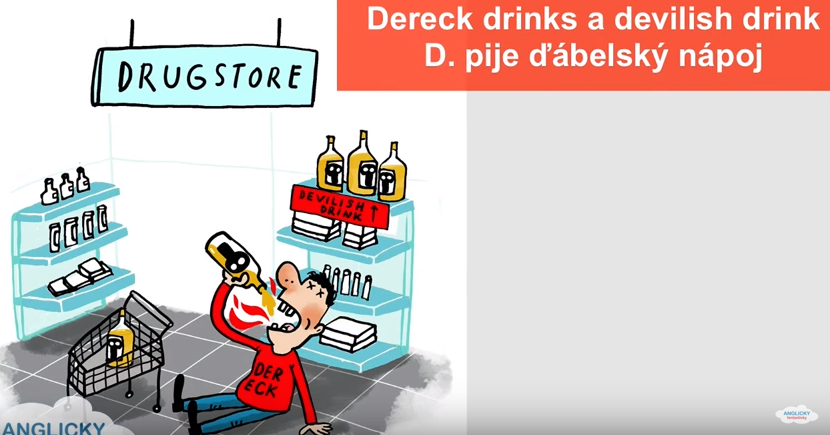
I developed my own LentiCOOL - lenticular memory cards, designed so that different information appears as the viewing angle changes.
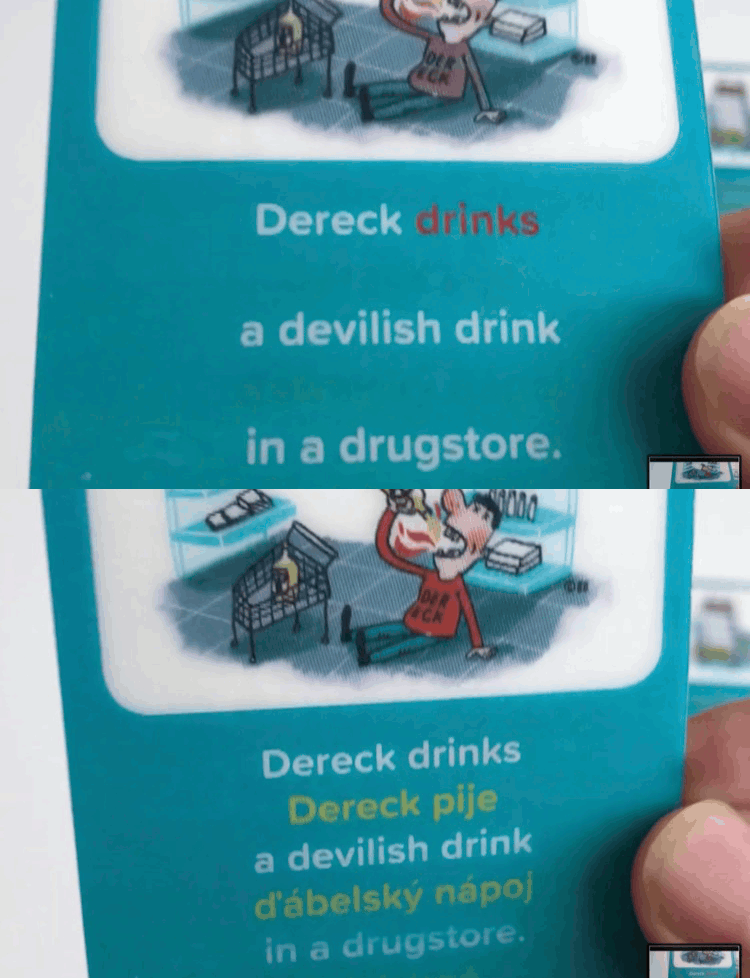
Move the card and the information changes with the viewing angle. A rather different experience from staring at another static vocabulary list. ( Based on my concept, charmingly illustrated by Bára Buchalová.)
I later went on to create learning environments for augmented and virtual reality.
Different media.
Different technologies.
The same question.
How can we give the brain more to work with?
A foreign word can remain a black shape beside another black shape called its translation. Or it can begin connecting with sounds, images, situations, memories and other things you already know. Same word. Very different material for the brain to work with.
And gradually another idea emerged: a word becomes far more memorable when it stops being an isolated translation and becomes part of a richer experience — something the brain can see, connect with, and enter.
That is what I mean by:
Turn Words Into Worlds.
And this is where the really interesting part begins.
So where do we go from here?
During those forty years, several questions kept returning. Each deserves more than a paragraph. Choose the one that interests you first and follow it deeper.
Subliminal Learning
Could vocabulary really enter memory below conscious awareness?
Explore Subliminal Learning → Coming soon.
Brainwaves and Alpha States
Can changing your mental state make language learning faster?
Explore Brainwaves and Alpha States → Coming soon.
Superlearning vs. Suggestopedia
What happened when Lozanov’s complex method travelled West and became a much simpler story?
Explore Superlearning vs. Suggestopedia → Coming soon.
Memory Techniques for Vocabulary
What happens when methods used by magicians and memory competitors are redesigned for language?
Explore Memory Techniques for Vocabulary → Coming soon.
The Spaced Repetition Myth
How effective is spaced repetition, really? And when can it create the illusion of learning rather than genuine, usable knowledge?
Explore Spaced Repetition → Coming soon.
And whichever path you choose, we keep returning to essentially the same question I started with while reading those books on magic:
So the real question is no longer why some words disappear.
It is how to make more of them stay — and turn words into worlds.
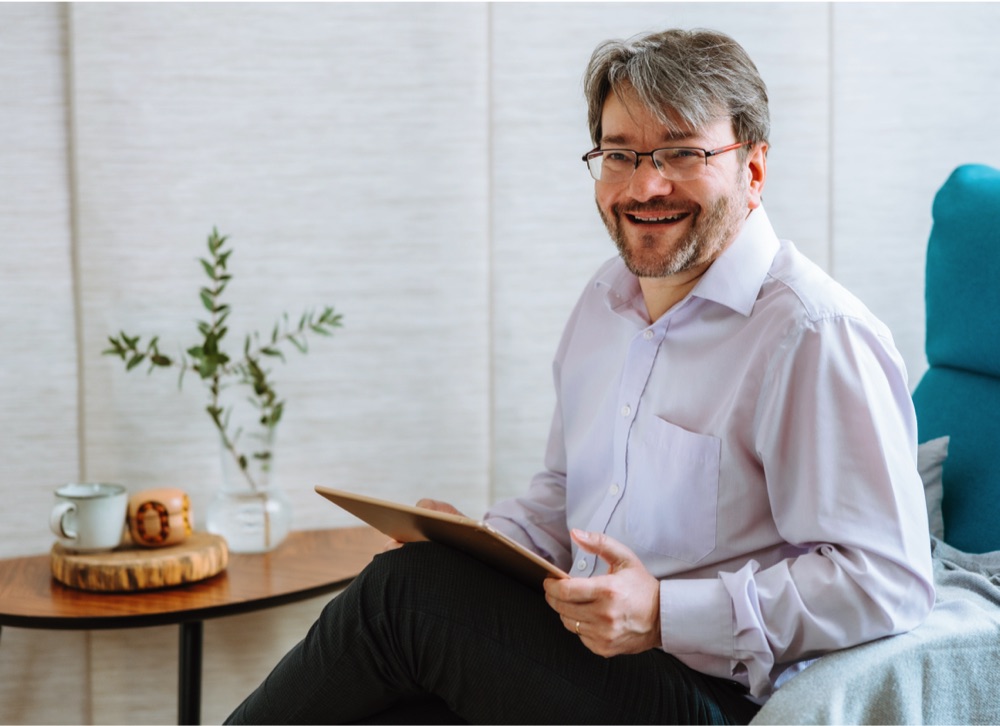
Memory. Attention. Technology. Creativity. Hypnosis. Together, they spell MATCH.
Libor Činka, author of The Invisible Illusionist, is an Ericksonian hypnotherapist, trainer, and creator of innovative learning methods who has spent over three decades exploring how this unusual combination can make learning more engaging and longer-lasting in memory.
The Curtain Is Up — The English Edition Is Here
The Invisible Illusionist is now available in English, the first language edition. Future translations will depend on reader interest. Leave your email and choose your preferred language to help us decide which edition comes next and receive updates about its availability.
