Saper Vedere in Action: Turn Words Into Worlds
Saper Vedere in Action begins with a simple question:
What if a foreign word is difficult to remember simply because there is almost nothing memorable about the way it has been presented to you?
A word.
A translation.
A few repetitions.
Then another word.
And another.
Soon they begin to blur together.
Saper Vedere starts somewhere else. The phrase means knowing how to see. For language learning, I use it as an invitation to look again—to notice relationships, patterns and possibilities that can turn an unfamiliar word into something your memory can grasp.
Sometimes the change is surprisingly small.
The effect can be surprisingly large.
Saper Vedere in Action: One Small Door Into a Word
Imagine that you already speak English and you are learning German.
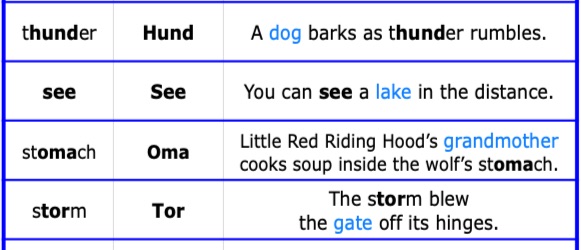
The German word Hund means dog.
You could repeat:
Hund — dog. Hund — dog. Hund — dog.
Or you could look at the word from another angle.
Inside the familiar English word tHUNDer, you can see HUND.
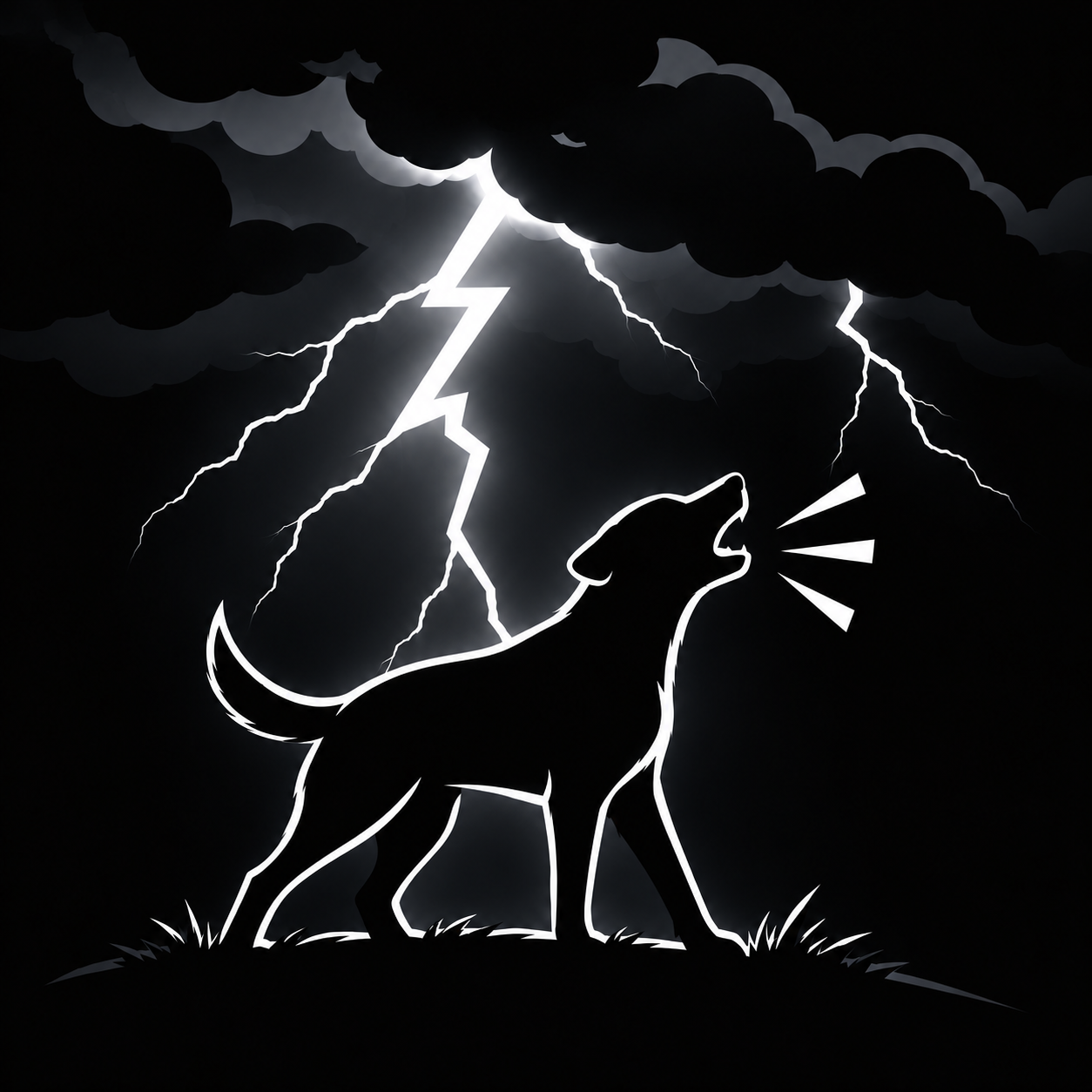
Now imagine a dog barking furiously while thunder crashes overhead.
Suddenly, Hund is no longer just an unfamiliar sound attached to the translation dog. It has become part of a vivid mental event.
The image gives the word something distinctive to hold on to. Instead of depending mainly on repetition, you create a memorable connection that can help you learn the German word much faster and remember it much longer.
Later, when you need the word again, the scene can help lead you back:
dog → thunder → HUND → Hund
The letters were there all along.
What changed was the way you looked at them.
This is a tiny taste of Saper Vedere in Action: one unfamiliar word, one discovered connection, and a memory image that makes the word easier to learn and remember.
The original teaching example connects Hund, dog and thunder in exactly this way.
But Saper Vedere Is Much More Than This
It would be easy to look at the example above and conclude that Saper Vedere is a trick for finding a foreign word hidden inside a familiar English word.
That is only one doorway.
The larger idea is to learn how to notice useful relationships.
Sometimes a relationship is already hiding inside a word. Sometimes it appears between several words. Sometimes sound begins to help. Sometimes a scene changes everything. Sometimes several different clues can support one another.
And sometimes the first mnemonic simply is not enough.
That is where Saper Vedere becomes much more interesting.
In The Invisible Illusionist, this shift is described as learning to search for relationships both within words and among words, and then allowing those connections to become part of a wider network.
The Method Is Not the Trick
A single example can look like a mnemonic.
Saper Vedere in Action is not about collecting clever tricks. It is about learning to see what you can use.
SV is the larger way of thinking behind it.
The question is not simply:
Which memory trick should I use?
A more useful question is:
What can I see here that I did not see before?
That change matters because words fail us in different ways.
Sometimes:
- you remember the meaning but lose the foreign word.
- the image is vivid but points in the wrong direction.
- a mnemonic works while you are reviewing it, then disappears in conversation.
- one word is easy and a list of thirty becomes chaos.
These are different problems. They deserve more than one automatic solution.
That is why I do not think of Saper Vedere as a collection of isolated tricks. The book itself describes it as a habit of looking for useful relationships between words, sounds, images and memory clues.
What Happens When One Mnemonic Is Not Enough?
This is one of the most important questions on this site.
You create a clever image.
You remember it.
Yet when the moment comes to speak, the word itself is missing.
Why?
Perhaps the image helped with only one part of the task.
Perhaps it points toward the meaning but not strongly enough toward the sound.
Perhaps it works in one direction and fails in the other.
Perhaps another word interferes.
That does not mean you have reached the limit of memory.
It means there is something more to discover.
→ When One Mnemonic Is Insufficient
Look Inside the Word
Another branch of Saper Vedere begins with a deceptively simple habit:
look inside.
A strange word can initially appear to be one solid block.
Look again and you may notice something familiar: part of another word, a name, a sound, a shape, perhaps even something from another language you know.
Once that happens, the word has changed.
It has acquired a landmark.
The Invisible Illusionist develops this idea through examples in several languages and shows how a familiar fragment can become the starting point for a memorable scene.
→ Hidden Patterns Inside Words - Coming soon 🚧
One Word Is Easy. What About Thirty?
A beautiful mnemonic for a single word can be impressive.
A method becomes much more interesting when it still works as the amount of vocabulary grows.
This question has occupied me for years.
How can separate words begin to support one another instead of becoming an ever-growing burden?
How can a list become a scene?
How can sound, rhythm and meaning begin to organize information into larger patterns?
At this point, Saper Vedere in Action begins to reveal its broader potential.
This is where Saper Vedere moves from individual memory tricks toward something closer to a system.
→ Scaling Vivid Methods to Lists - Coming soon 🚧
When a Brilliant Image Fails
There is another problem that almost every enthusiastic user of mnemonics eventually meets.
The image is wonderful.
Funny. Strange. Unforgettable.
And useless.
You remember the scene perfectly and still cannot recover the exact foreign word.
A memory image has to do more than entertain you.
It has to lead somewhere.
This is one of the themes I return to repeatedly in The Invisible Illusionist: the real test of a memory connection is whether it can help you find your way back to the information you wanted. The book even tests this explicitly in both directions—first from word to scene, then from scene back to the word.
→ Troubleshooting Confusing Word Images - Coming soon 🚧
More Than Thirty Years of Looking for Better Ways to Learn
Saper Vedere did not begin as a name for a book.
It grew out of a much longer search.
For more than three decades, I have explored ways to make learning easier and memory more durable. I studied mnemonic systems, experimented with them, modified them, discarded some of them and kept developing others.
At the beginning of this millennium, I also began taking part in memory competitions. Later, I tested the practical value of memory methods with participants in my language courses.
That combination was important.
A technique can look brilliant in a demonstration and still become awkward when you try to use it with real vocabulary, real learners and hundreds of words.
The search gradually expanded from memory systems into stories, alliteration, visual design, hypnosis, augmented reality and virtual reality.
The book grew from that journey. Its experiments and examples are based on my teaching, experimentation and decades of searching for easier and more memorable ways to learn.
Why The Invisible Illusionist Is Not a Conventional Memory Book?
I could have written:
Technique 1.
Technique 2.
Technique 3.
Instead, The Invisible Illusionist unfolds as a fictional television interview.
Ideas appear in action.
A problem emerges.
Someone looks again.
Something hidden becomes visible.
The reader is invited to take part in the discoveries rather than merely read instructions about them.
That structure is deliberate. The television-studio format was chosen to demonstrate ideas in action rather than only describe them.
The journey moves from individual words to larger patterns, from abstract information to scenes, and from isolated memory aids toward a different way of seeing language.
By the end, memory has become a training ground for something larger.
The book puts it simply:
Saper Vedere. Turn Words Into Worlds.
The Example Above Is a Glimpse, Not the System
The dog and the thunder show one tiny possibility.
Saper Vedere in Action starts with moments like this, but it does not end with a single word.
There are many more doors. A few are already visible, while others emerge only when separate pieces begin to connect. Sometimes the way forward has to be created rather than discovered. And every so often, a connection changes the way you think about vocabulary altogether.
That is the journey inside The Invisible Illusionist.
Memory. Attention. Technology. Creativity. Hypnosis. Together, they spell MATCH.
Libor Činka, author of The Invisible Illusionist, is an Ericksonian hypnotherapist, trainer, and creator of innovative learning methods who has spent over three decades exploring how this unusual combination can make learning more engaging and longer-lasting in memory.
The Curtain Is Up — The English Edition Is Here
The Invisible Illusionist is now available in English, the first language edition. Future translations will depend on reader interest. Leave your email and choose your preferred language to help us decide which edition comes next and receive updates about its availability.
